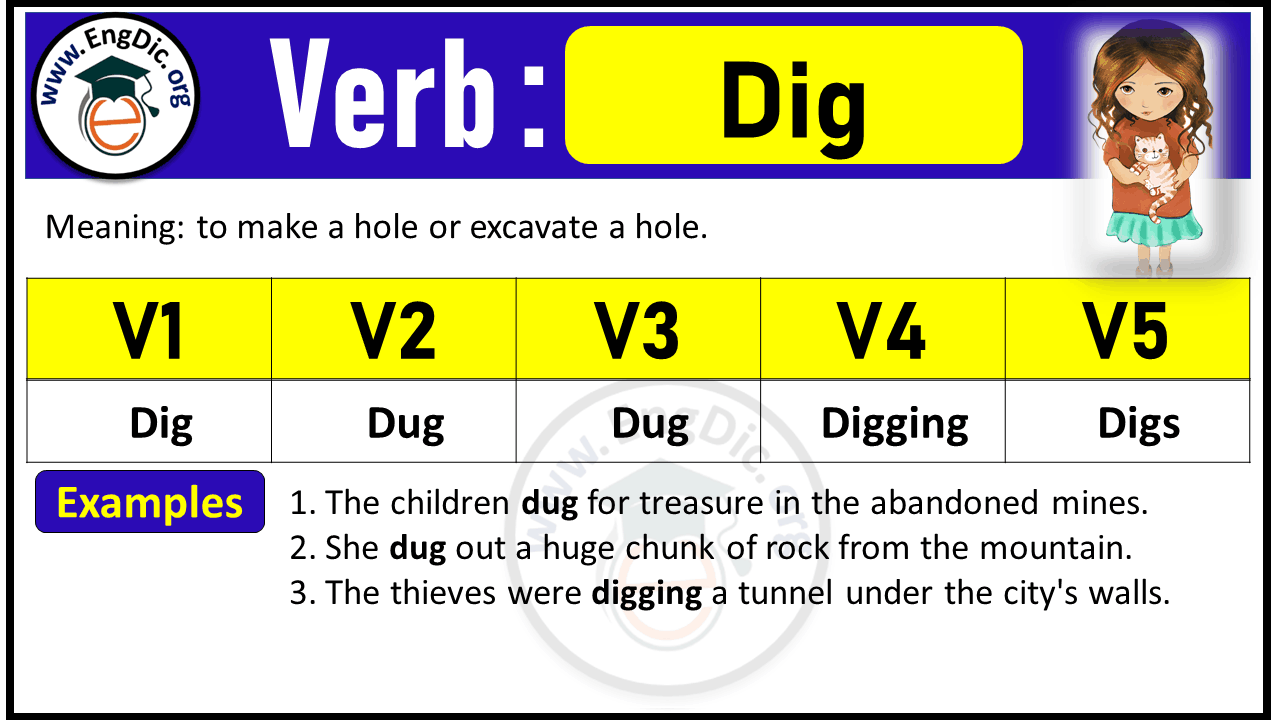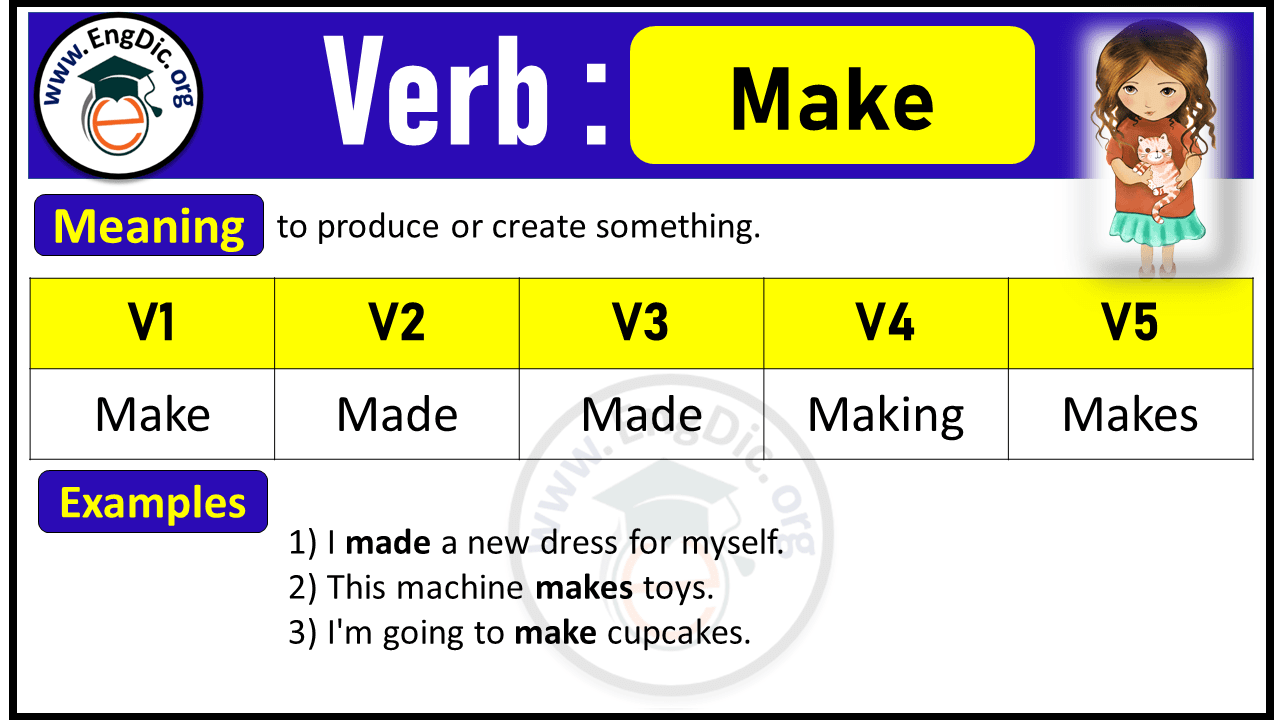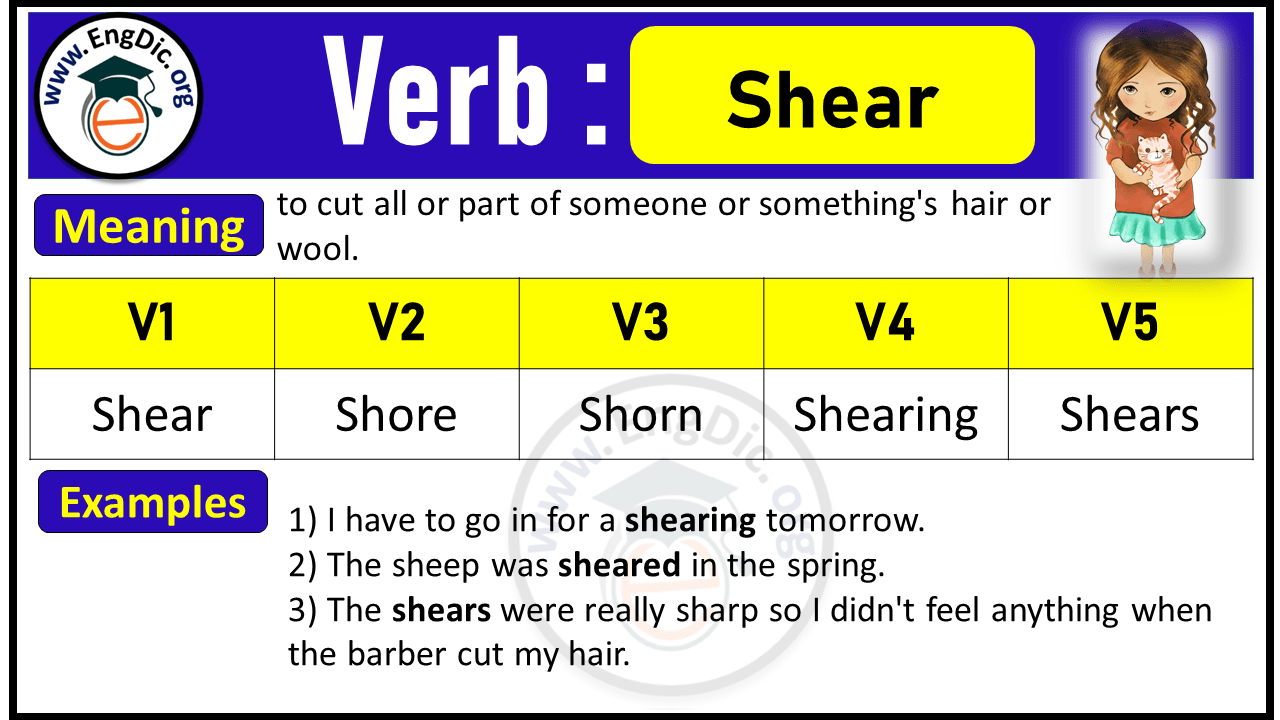
In today’s useful lesson, we’re going to talk about a special part of learning English: verbs! Verbs are words that show actions, like “run” or “eat.” We will look at 50 verbs in different forms, called V1, V2, V3, V4, and V5. This might sound a bit tricky, but it’s really helpful for speaking and writing better English. Whether you’re just starting to learn English or you want to get even better at it, this lesson is for you. Let’s make English easy and fun together!
What Do V1, V2, V3, V4 and V5 Mean?
Every English verb can appear in five forms. Once you know what each form does, the big table below becomes easy to read. Here is the verb write in all five forms:
| Form | Name | Example Form | Example Sentence |
|---|---|---|---|
| V1 | Base form | write | I write in my notebook every day. |
| V2 | Past simple | wrote | She wrote a letter yesterday. |
| V3 | Past participle | written | He has written three books. |
| V4 | Third person singular (he, she, it) | writes | My teacher writes on the board. |
| V5 | -ing form (present participle) | writing | We are writing the exam now. |
One friendly warning: some books and websites swap the V4 and V5 labels, using V4 for the -ing form. The names matter more than the numbers, so always check which convention your book is using. On this page, V4 is the he/she/it form and V5 is the -ing form, exactly as you see in the table below.
Verb Forms V1 V2 V3 V4 V5
| V1 | V2 | V3 | V4 | V5 |
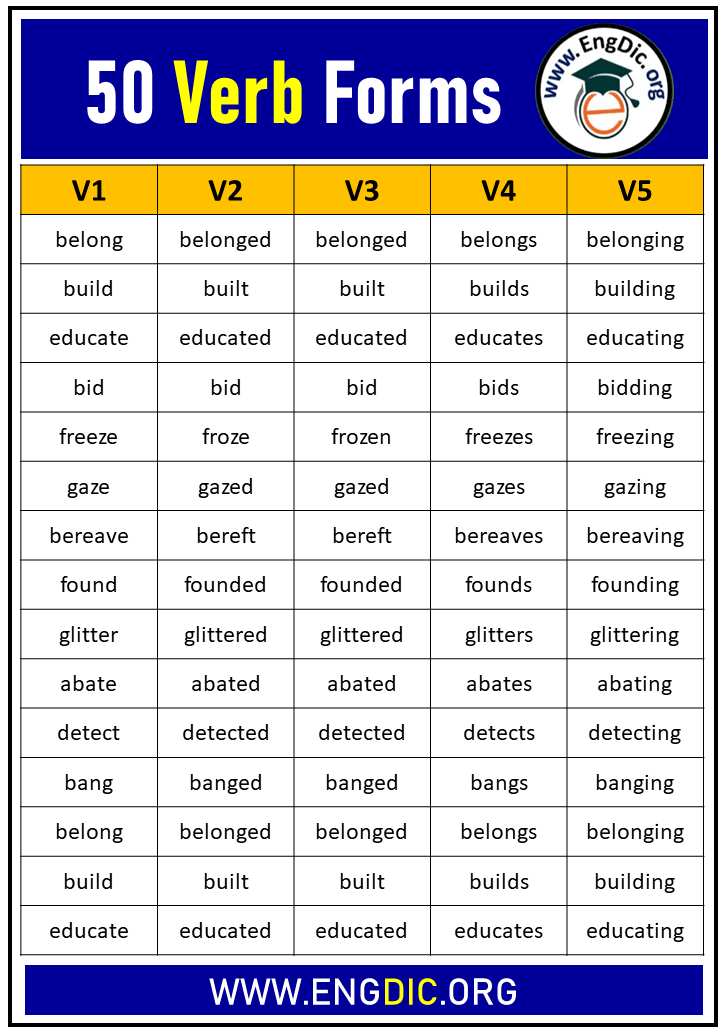
| belong | belonged | belonged | belongs | belonging |
| build | built | built | builds | building |
| educate | educated | educated | educates | educating |
| bid | bid | bid | bids | bidding |
| freeze | froze | frozen | freezes | freezing |
| gaze | gazed | gazed | gazes | gazing |
| bereave | bereaved | bereaved | bereaves | bereaving |
| found | founded | founded | founds | founding |
| glitter | glittered | glittered | glitters | glittering |
| abate | abated | abated | abates | abating |
| detect | detected | detected | detects | detecting |
| bang | banged | banged | bangs | banging |
| escape | escaped | escaped | escapes | escaping |
| broadcast | broadcast | broadcast | broadcasts | broadcasting |
| exchange | exchanged | exchanged | exchanges | exchanging |
| grow | grew | grown | grows | growing |
| beautify | beautified | beautified | beautifies | beautifying |
| flee | fled | fled | flees | fleeing |
| V1 | V2 | V3 | V4 | V5 |
| grant | granted | granted | grants | granting |
| bow | bowed | bowed | bows | bowing |
| celebrate | celebrated | celebrated | celebrates | celebrating |
| cool | cooled | cooled | cools | cooling |
| bat | batted | batted | bats | batting |
| believe | believed | believed | believes | believing |
| gain | gained | gained | gains | gaining |
| behave | behaved | behaved | behaves | behaving |
| bring | brought | brought | brings | bringing |
| forbid | forbade | forbidden | forbids | forbidding |
| abash | abashed | abashed | abashes | abashing |
| admire | admired | admired | admires | admiring |
| engrave | engraved | engraved | engraves | engraving |
| choose | chose | chosen | chooses | choosing |
| forecast | forecast | forecast | forecasts | forecasting |
| ache | ached | ached | aches | aching |
| eye | eyed | eyed | eyes | eyeing |
| flop | flopped | flopped | flops | flopping |
| consist | consisted | consisted | consists | consisting |
| exclaim | exclaimed | exclaimed | exclaims | exclaiming |
| explain | explained | explained | explains | explaining |
| animate | animated | animated | animates | animating |
| feed | fed | fed | feeds | feeding |
| fish | fished | fished | fishes | fishing |
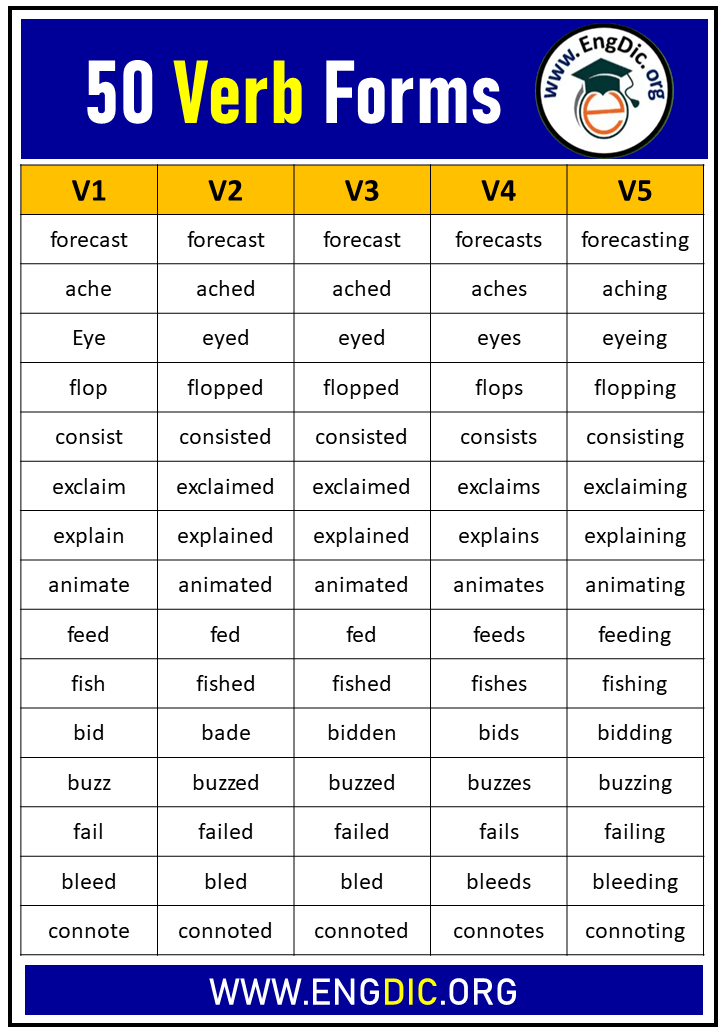
| V1 | V2 | V3 | V4 | V5 |
| buzz | buzzed | buzzed | buzzes | buzzing |
| fail | failed | failed | fails | failing |
| bleed | bled | bled | bleeds | bleeding |
| connote | connoted | connoted | connotes | connoting |
| guide | guided | guided | guides | guiding |
| agree | agreed | agreed | agrees | agreeing |
| finish | finished | finished | finishes | finishing |
| grab | grabbed | grabbed | grabs | grabbing |
| betray | betrayed | betrayed | betrays | betraying |
| cleave | clove/cleft | cloven/cleft | cleaves | cleaving |
| damp | damped | damped | damps | damping |
| be (am,are) | was / were | been | is | being |
| confuse | confused | confused | confuses | confusing |
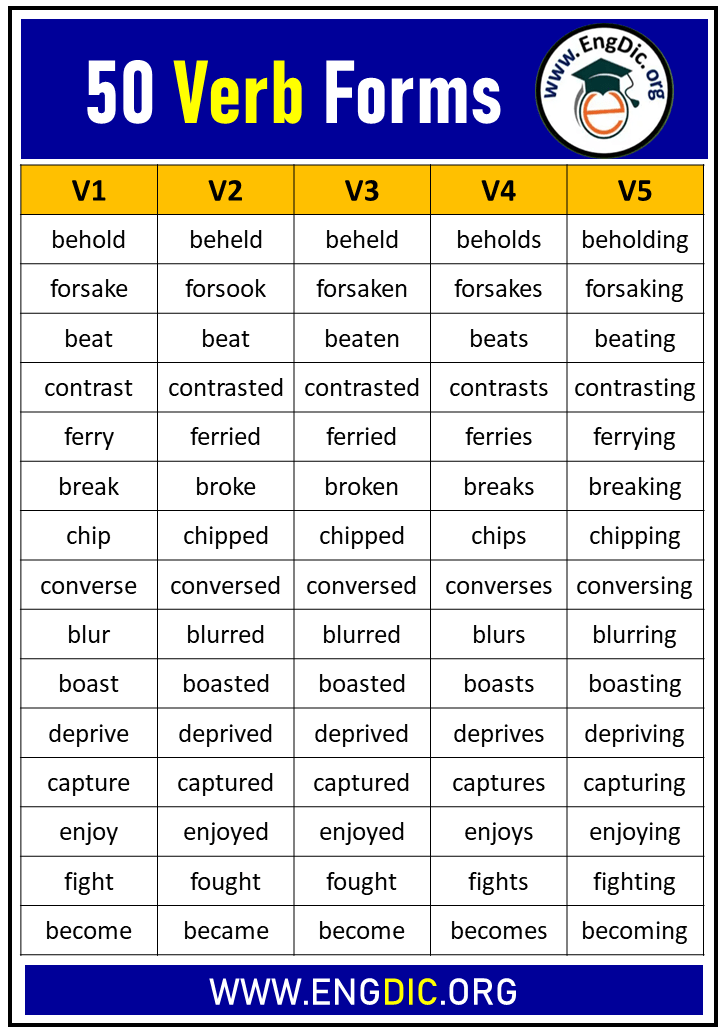
| behold | beheld | beheld | beholds | beholding |
| forsake | forsook | forsaken | forsakes | forsaking |
| beat | beat | beaten | beats | beating |
| contrast | contrasted | contrasted | contrasts | contrasting |
| ferry | ferried | ferried | ferries | ferrying |
| break | broke | broken | breaks | breaking |
| chip | chipped | chipped | chips | chipping |
| converse | conversed | conversed | converses | conversing |
| blur | blurred | blurred | blurs | blurring |
| boast | boasted | boasted | boasts | boasting |
| deprive | deprived | deprived | deprives | depriving |
| capture | captured | captured | captures | capturing |
| enjoy | enjoyed | enjoyed | enjoys | enjoying |
| fight | fought | fought | fights | fighting |
| become | became | become | becomes | becoming |
| empower | empowered | empowered | empowers | empowering |
| explore | explored | explored | explores | exploring |
| buy | bought | bought | buys | buying |
| grade | graded | graded | grades | grading |
Which Verb Form Goes With Which Tense?
The five forms exist because each tense asks for a different one. Keep this little chart next to you while you study:
| Tense | Form You Need | Example |
|---|---|---|
| Present simple (I, you, we, they) | V1 | They play soccer on Sundays. |
| Present simple (he, she, it) | V4 (add -s or -es) | He plays soccer on Sundays. |
| Past simple | V2 | They played soccer last Sunday. |
| Present perfect (have / has) | V3 | She has played in three matches. |
| Present continuous (am, is, are) | V5 (-ing form) | Look, they are playing right now. |
| Future simple (will) | V1 | We will play again tomorrow. |
Spelling Rules for -ed, -s and -ing
Regular verbs build their forms with endings, and the spelling changes a little depending on the last letters of the verb. These are the patterns that cause the most mistakes:
| Pattern | Rule | Examples |
|---|---|---|
| Most verbs | Just add the ending | work – worked – working, play – played – playing |
| Verb ends in -e | Add -d for the past; drop the -e before -ing | live – lived, make – making, write – writing |
| Short verb, consonant-vowel-consonant | Double the last letter | stop – stopped, run – running, sit – sitting |
| Verb ends in consonant + y | Change y to i, then add the ending | try – tried – tries, carry – carried – carries |
| Verb ends in s, sh, ch, x or o | Add -es for the he/she/it form | watch – watches, wash – washes, go – goes |
| Verb ends in -ie | Change ie to y before -ing | die – dying, lie – lying |
Example Sentences With Verb Forms
Here are some verbs from the table above at work in real sentences. Reading the forms inside sentences is the fastest way to make them stick:
- We built a tree house last summer, and we have built two more since then.
- She chooses her words carefully. Yesterday she chose the blue notebook.
- Have you chosen your subjects for next year?
- The lake has frozen, so the children are skating on it today.
- He bought a ticket, but he has not used it yet.
- The flowers are growing fast because it rains every week.
Common Mistakes to Avoid
- Incorrect: I have went home. Correct: I have gone home. Use V3 (gone) after have, not V2 (went).
- Incorrect: She have a car. Correct: She has a car. With he, she and it, have becomes has.
- Incorrect: He taked the bus. Correct: He took the bus. Take is irregular, so its past form is took.
- Incorrect: They have ate lunch. Correct: They have eaten lunch. Eat is irregular: ate is V2, eaten is V3.
- Incorrect: The letter was wrote by Ana. Correct: The letter was written by Ana. Passive sentences need V3.

Verb Forms FAQs
What are V1, V2 and V3 forms of a verb?
V1 is the base form (go), V2 is the past simple form (went), and V3 is the past participle form (gone), which we use with have, has and had. For regular verbs, V2 and V3 look the same: play, played, played.
What is the difference between V2 and V3?
V2 works alone for finished past actions: I went home early. V3 almost never works alone; it needs a helper verb: I have gone home early. If you can put have in front of it, it is V3.
How many forms does an English verb have?
Most main verbs have five forms in the V1 to V5 system: base form, past simple, past participle, the he/she/it -s form, and the -ing form. A few helper verbs like can and must do not have the full set.
What are the five forms of go?
Go (V1), went (V2), gone (V3), goes (V4), going (V5). Go is irregular, which is why went and gone look nothing like the base form.
Do V2 and V3 always look the same?
Only for regular verbs: work, worked, worked. Many common irregular verbs have two different forms: write, wrote, written; sing, sang, sung; begin, began, begun. These are worth memorizing one by one.
Keep Learning With Words
Ready to keep building your English grammar and vocabulary?
- Singular and plural words list: the noun tables every learner needs.
- English tools and translators: fun tools that help you learn and play with words.
- From the blog: fresh word lists and English tips.